
Why Insurance Quotes With the Same Coverage Aren’t the Same
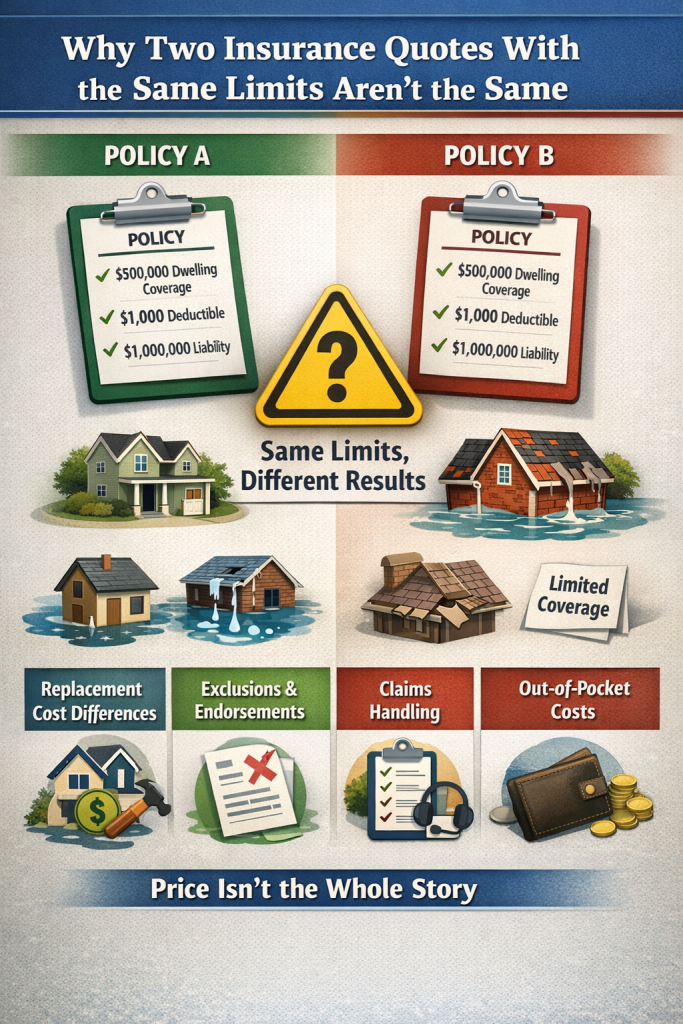
Two insurance policies can share the same limits but deliver very different results when a claim occurs.
At first glance, insurance quotes are easy to compare. Same dwelling limit. Same deductible. Same liability amount. One costs less — so it must be the better deal, right?
Not necessarily.
Insurance policies that look identical on paper can perform very differently when a claim happens. To compare policies correctly, you have to look beyond the limits and understand how coverage is defined, applied, and settled in real-world claims.
Limits Are Just the Starting Point
Coverage limits tell you the maximum a policy may pay — but not when it pays, how it pays, or what conditions must be met before coverage applies.
For example, two homeowners policies may show:
-
$500,000 dwelling coverage
-
$1,000 deductible
-
$1,000,000 liability
Yet they can produce very different outcomes after a loss — because the details of how the policy defines coverage determine what gets paid, what gets limited, and what gets excluded.
Replacement Cost Isn’t Always the Same
“Replacement cost” is one of the most misunderstood terms in homeowners insurance — and it’s a major reason “same limits” doesn’t always mean “same protection.”
Some policies:
-
Pay replacement cost only after depreciation is withheld and repairs are completed
-
Limit replacement cost to specific materials or methods
-
Apply replacement cost differently to roofs, siding, or older homes
Others:
-
Offer broader replacement cost definitions
-
Include extended or guaranteed replacement cost
-
Reduce the chance of out-of-pocket surprises after a claim
On paper, both may say “replacement cost.” In reality, they may settle the same loss very differently.
Deductibles and Claims Don’t Always Work the Way You Expect
Many people assume the deductible is always exactly what they’ll pay out of pocket. In real claims, it often doesn’t work that cleanly.
In practice:
-
Deductibles apply to covered losses
-
Depreciation may be withheld initially and reimbursed later
-
Some claims may cost less than the deductible to repair
-
Some damage may be partially covered or limited
That’s why two policies with the same deductible can result in very different net payments — even for the same type of loss.
Exclusions and Endorsements Matter — A Lot
What isn’t covered can be just as important as what is — because exclusions are where unpleasant surprises usually come from.
Important differences often show up in areas like:
- Water damage definitions
- Sewer or drain backup coverage
- Equipment breakdown
- Ordinance or law coverage (building code upgrades)
- Matching of siding or roofing
- Personal property valuation methods
One policy may include these automatically. Another may exclude them entirely or require added endorsements — and many people don’t realize the difference until they file a claim.
Claims Handling Is Part of the Policy
Insurance is a promise to perform in the future — and the claim experience is where that promise is tested.
The quality of that performance often depends on:
-
The carrier’s claims philosophy
-
Adjuster training and authority
-
How disputes are resolved
-
Timeliness and communication during a claim
Two policies can look identical on paper — but feel completely different during the most stressful moment: a loss.
Why Price Alone Is a Poor Comparison Tool
Lower premiums don’t always indicate efficiency. Often they reflect:
-
Narrower coverage definitions
-
More exclusions
-
Lower claims settlement flexibility
-
Higher likelihood of out-of-pocket costs
The real cost of insurance isn’t just the premium — it’s the gap between what you thought you bought and what actually gets paid after a claim.
The Role of an Insurance Professional
Comparing insurance properly requires more than matching limits. It requires:
-
Understanding policy language
-
Knowing how claims are actually adjusted
-
Anticipating how a policy will respond to specific loss scenarios
-
Matching coverage to the property, lifestyle, and risk tolerance
That’s why two quotes with the same limits usually aren’t truly comparable without a professional review.
A Better Question to Ask
Instead of asking:
“Why does this policy cost more?”
A better question is:
“What happens differently when I have a claim?”
That’s the question we help answer every day.
Before You Change a Policy…
If you’re reviewing insurance as part of a financial or planning discussion, that’s smart — and it’s exactly when coverage mistakes can happen if policies are changed too quickly.
Before you change a policy, make sure the differences are evaluated by an insurance professional. Small details in language, exclusions, and endorsements can create big gaps later.
If you’re comparing quotes and want to know what’s truly different, call us first. A short conversation now can prevent an expensive surprise later.