
Boat Owners Insurance in Guilford, CT
Connecticut doesn’t actually require boat insurance by law for most owners. If you finance your boat, your lender almost certainly will, and most marinas around Guilford Harbor require proof of coverage before they’ll rent you a slip.
So in practice, most boat owners here carry it anyway, and for good reason, since a single accident, storm, or theft claim can cost far more than a policy ever would.
At Page Insurance, we help Guilford boat owners find coverage built for actual conditions on Long Island Sound, not a generic nationwide template.
As an independent agency, we compare policies across multiple marine carriers to match your coverage to your boat, your slip, and how you actually use it.
The Homeowners Insurance Myth
~$1,000
Typical homeowners cap for small, unpowered watercraft on your property
A lot of boat owners assume their homeowners policy already covers them on the water. It doesn’t, at least not meaningfully.
Homeowners insurance provides limited coverage for small, unpowered watercraft — a canoe, kayak, or rowboat — but only while it’s on your property, and usually capped around $1,000.
That’s nowhere close to enough for a motorized boat, and it offers essentially no liability protection once you’re out on the water.
If your only coverage right now is whatever your homeowners policy happens to include, you likely have a real gap.
What a Boat Insurance Policy Covers
Physical Damage Coverage
Protects your boat and its equipment against accidents, storms, fire, and theft.
Depending on how your policy is written, this can be settled on an actual cash value or agreed value basis, and the difference matters more than most owners realize.
Liability Coverage
If you injure someone or damage another boat or dock, this protects your finances from the resulting claim.
It's the piece most owners underestimate until they need it.
Uninsured Boater Protection
Covers you if you're hit by another boater who doesn't carry adequate insurance — more common on busy Sound weekends than most people expect.
Rental Reimbursement
If your boat is out of commission after a covered accident, this add-on covers the cost of a rental while repairs are underway.
Coverage from your own policy doesn't automatically extend to a rented or borrowed boat by default, so it's worth confirming exactly what transfers and what doesn't.
Agreed Value vs. Actual Cash Value
This distinction quietly matters more than almost anything else in a marine policy, and it’s rarely explained clearly.
Actual cash value
Actual cash value pays out your boat's depreciated worth after a total loss — meaning a boat that cost $60,000 five years ago might only be worth a fraction of that today in the insurer's eyes.
Agreed value
Agreed value locks in a specific payout amount, negotiated when the policy is written, regardless of depreciation.
For older or well-maintained boats especially, agreed value coverage can mean the difference between a fair settlement and a disappointing one.
Seasonal Storage and Hurricane Coverage
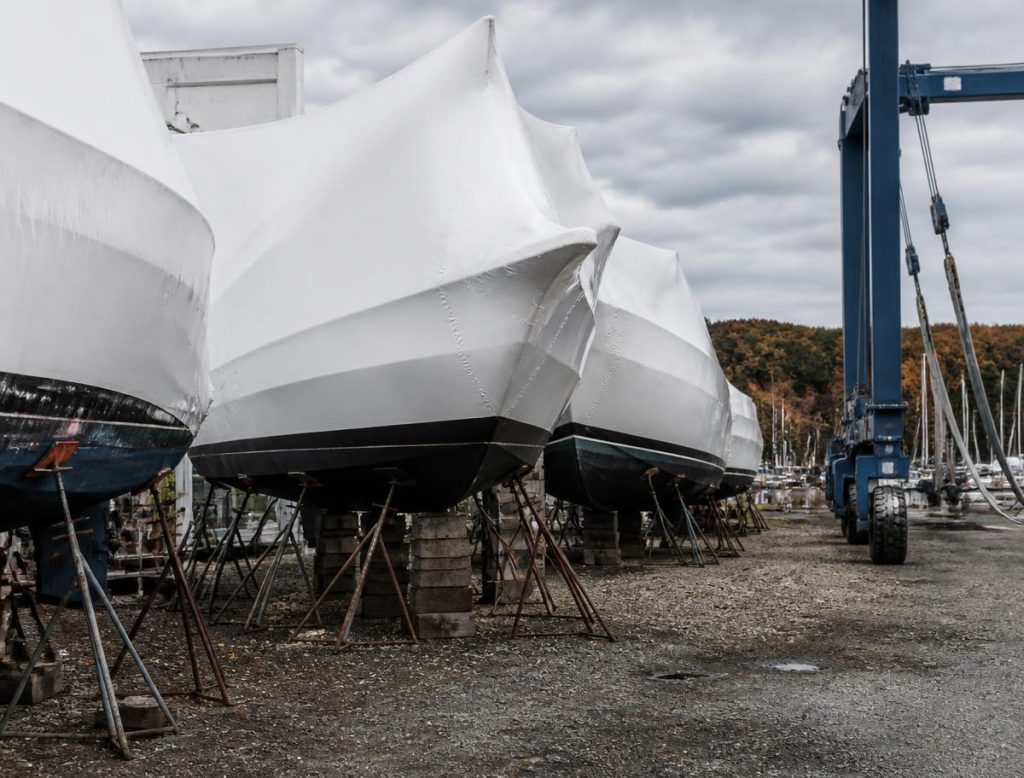
Connecticut boat owners deal with a real seasonal rhythm — haul-out in the fall, storage over winter, re-launch in spring.
Many marine policies include hurricane haul-out coverage, which can help with the cost of pulling your boat from the water ahead of a named storm, and lay-up coverage for the months it’s sitting on land.
Given how much of Guilford’s boating community stores vessels seasonally along the shoreline, this is worth confirming rather than assuming your policy includes it automatically.
Boating on Long Island Sound
Guilford Harbor and the surrounding Sound bring specific conditions a generic policy doesn’t always account for — crowded summer weekends, fog rolling in off the water, and the kind of sudden squalls that can turn a calm afternoon rough with little warning.
We work with boat owners who keep everything from a small runabout to a larger cruiser docked locally, and we tailor coverage to how your boat is used, not a one-size-fits-all assumption.
Why Guilford Families Choose an Independent Agent
"George and his team went above and beyond to find the best coverage for our situation."
A call center quote tool doesn’t know the difference between a boat kept at a Guilford marina and one trailered to a lake for the weekend.
We do, and we shop your policy across carriers who understand marine risk instead of treating your boat like an afterthought on an auto policy.
Many of our boat-owning clients also carry Coastal Homeowners Insurance for their waterfront property and a Personal Umbrella Insurance policy for the extra liability protection a boat and a home near the water both call for.
Is boat insurance required by law in Connecticut?
Not for most owners. Connecticut doesn’t mandate it directly, but a lender will typically require it if you’re financing the boat, and many marinas require proof of coverage before issuing a slip.
Does my homeowners policy cover my boat?
Only in a very limited way. It may cover a small unpowered watercraft while it’s on your property, often capped around $1,000, but it doesn’t provide meaningful coverage or liability protection for a motorized boat on the water.
What's the difference between agreed value and actual cash value coverage?
Agreed value locks in a specific payout amount set when the policy is written. Actual cash value pays out the boat’s depreciated worth at the time of loss, which is often significantly less on an older vessel.
Do I need to report a boating accident?
Yes, if the accident results in death, serious injury, or a disappearance, Connecticut law requires it to be reported.
Does my policy cover a rental boat while mine is being repaired?
Only if you’ve added rental reimbursement coverage. It’s a relatively small add-on that closes a gap most owners don’t think about until they need it.
What to Know About Reporting an Accident
Connecticut law requires reporting a boating accident that results in death, serious injury, or a disappearance.
It’s not something most boat owners think about until they’re in the middle of a stressful situation, but knowing the requirement exists ahead of time is one less thing to figure out in the moment.
Serving Guilford and the Connecticut Shoreline
Page Insurance, Ltd. has helped Guilford boat owners find the right coverage since 1943. We proudly serve boaters throughout Guilford, Branford, Madison, and the greater New Haven and Middlesex County shoreline.