
5 Home Improvements You Should Always Tell Your Insurance Agent About
Home improvement projects can make your home more comfortable, efficient, and valuable. From installing solar panels to finishing a basement, upgrades can significantly change the value and risk profile of your property.
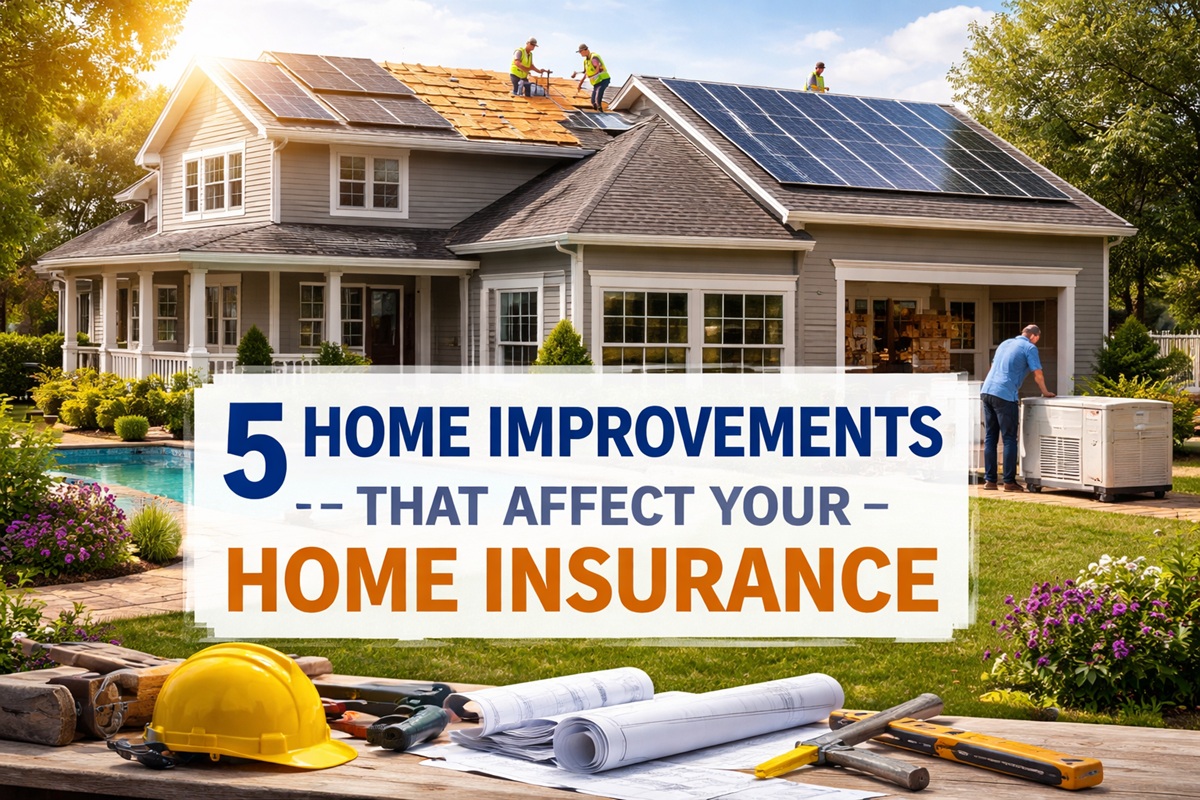
Major home upgrades like solar panels, roof replacements, and swimming pools can affect your homeowners insurance coverage.
But one step many homeowners forget is updating their homeowners insurance policy.
Your insurance coverage is based on the cost to rebuild your home and the risks associated with the property. When major changes occur, your coverage may need to be adjusted.
If your policy isn’t updated, you could face coverage gaps or unexpected issues during a claim.
Here are five home improvements that can affect your homeowners insurance and should always be reported to your insurance agent.
Why Home Improvements Can Affect Your Insurance
Insurance companies determine coverage based on several factors, including:
- The rebuild value of your home
- Structural features of the property
- Risk exposure
- Liability concerns
When you make upgrades, the value of your home often increases. Some improvements may also change the level of risk associated with the property.
For example, installing a swimming pool increases liability exposure, while replacing a roof can reduce the risk of certain claims. Updating your policy helps ensure your home is insured accurately if a major loss occurs.
Common Home Improvements That Affect Insurance
| Home Improvement | Why It Matters for Insurance |
|---|---|
| Solar Panels | Increase replacement cost of the home |
| Roof Replacement | Improves the home’s risk profile |
| Finished Basement | Raises rebuild value |
| Swimming Pool | Adds liability risk |
| Standby Generator | Increases property value |
1. Installing Solar Panels
Solar energy systems are becoming increasingly popular as homeowners look for ways to reduce energy costs.
Roof-mounted solar panels are typically considered part of the dwelling structure in homeowners insurance policies. Because of this, they are included in the home’s replacement cost estimate.
Solar systems can add $15,000 to $30,000 or more to a home’s value.
Letting your insurance agent know helps ensure:
- Your replacement cost estimate is accurate
- The solar system is properly documented
- Coverage applies if the panels are damaged
If your system is leased rather than owned, insurance responsibilities may differ, which makes a quick policy review helpful.
2. Replacing the Roof
The condition and age of a roof are important factors for insurance companies.
An older roof may increase the likelihood of wind or water damage claims. A newly installed roof can improve the overall risk profile of the home.
A roof replacement may:
- Improve eligibility with certain insurers
- Reduce the likelihood of future claims
- Strengthen the home’s overall insurance profile
Providing your insurance agent with the installation date and roofing material helps ensure your policy reflects the current condition of the home.
3. Finishing a Basement
A finished basement can significantly increase the cost to rebuild a home after a major loss.
Finished basements often include:
- Flooring and drywall
- Electrical systems
- Plumbing and fixtures
- Built-in cabinetry
- Furniture and electronics
Because basements can also be vulnerable to water backup or sump pump issues, it may be worth reviewing whether additional protection such as water backup coverage is appropriate.
4. Installing a Swimming Pool
Swimming pools create a great space for family gatherings and outdoor enjoyment, but they can also increase liability exposure.
Insurance companies may want to confirm:
- The type of pool (above-ground or in-ground)
- Safety features such as fencing
- Locking gates or pool covers
- Current liability coverage limits
Many homeowners with pools choose to increase their liability protection or add an umbrella insurance policy for additional coverage.
5. Adding a Standby Generator
Permanent standby generators are becoming more common as homeowners prepare for storm-related power outages.
Unlike portable generators, these systems are installed on a pad and connected directly to the home’s electrical system.
Because standby generators often cost $10,000 to $20,000 or more installed, they can increase the replacement cost of the home.
Since these systems are permanently attached, they are usually considered part of the dwelling structure for insurance purposes.
When Should You Update Your Homeowners Insurance?
A simple rule of thumb is to notify your insurance agent if a home improvement project costs more than a few thousand dollars.
Major renovations can affect:
- The home’s rebuild cost
- Structural features
- Liability exposure
Even a quick policy review can help ensure your coverage remains accurate.
Many experts recommend reviewing your homeowners insurance every one to two years, especially if you’ve made improvements to your home.
FAQ: Home Improvements and Homeowners Insurance
Do home improvements increase homeowners insurance premiums?
Not always. Some improvements reduce risk, such as replacing an aging roof. Others simply increase the value of the home. The goal is to make sure your insurance coverage reflects the current rebuilding cost of the property.
Should I notify my insurance company about home upgrades?
Yes. Projects that change the structure, value, or liability exposure of the home should be reported so your policy can be reviewed and updated if needed.
What types of home improvements should always be reported?
Common examples include:
- Solar panel installations
- Roof replacements
- Swimming pools
- Finished basements
- Standby generators
- Major additions or renovations
How often should homeowners review their insurance?
A brief coverage review every one to two years is a good practice, especially if you have made significant improvements to your home.
Final Thoughts
Your home evolves over time as you make improvements and upgrades. Your insurance coverage should evolve with it.
If you’ve recently completed a major upgrade or are planning one soon, it’s worth having a quick conversation with your insurance agent to ensure your policy accurately reflects your home’s value and features.
Keeping your policy up to date helps protect your home and avoid surprises if a claim ever occurs.