
Connecticut Event Season Is Here. Is Your Event Protected?
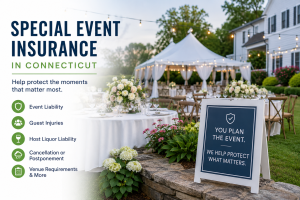
Spring and early summer in Connecticut are full of big events: weddings, proms, graduation parties, fundraisers, golf outings, outdoor concerts, family celebrations, and community events.
These are exciting moments, but they can also involve a lot of planning, money, vendors, contracts, deposits, and risk. A sudden storm, a vendor issue, a venue requirement, property damage, an injury, or an alcohol-related incident can turn a special day into a very expensive problem.
That is where special event insurance and, in some cases, weather-related event coverage can help.
If you are hosting a wedding, prom, graduation party, private celebration, nonprofit event, or business event in Connecticut, it is worth asking a simple question:
What happens if something goes wrong?
What Is Special Event Insurance?
Special event insurance is coverage designed to protect a one-time event. Depending on the policy, it may include coverage for things like:
- Event liability
- Property damage caused during the event
- Guest injuries
- Host liquor liability
- Cancellation or postponement
- Lost deposits
- Vendor issues
- Damage to rented property or equipment
Many venues in Connecticut require proof of liability insurance before they will allow an event to take place. That proof usually comes in the form of a Certificate of Insurance, often showing the venue as an additional insured.
Special event insurance is common for weddings, but it can also apply to many other events, including proms, graduation parties, anniversary parties, retirement parties, fundraisers, corporate events, golf tournaments, and outdoor festivals.
What Is Weather Insurance for an Event?
Weather insurance can mean different things depending on the policy.
For many private events, weather-related protection is often part of an event cancellation or postponement policy. This may help if severe weather makes it impossible or unsafe for the event to happen as planned.
For larger commercial or public events, separate weather insurance may sometimes be available for specific weather risks, such as excessive rain, extreme temperatures, snow, wind, or other defined weather conditions.
The important point is this: not every event policy automatically covers weather problems. A light rain shower, inconvenience, poor turnout, or a decision to cancel because the weather looks unpleasant may not be enough to trigger coverage. Policies vary, and weather coverage often depends on the exact wording, timing, and severity of the event.
That is why it is important to review coverage before you assume your event is protected.
Why Connecticut Events Need Weather and Special Event Insurance
Connecticut weather can be unpredictable, especially during wedding, prom, and graduation season. A beautiful outdoor event can quickly be affected by thunderstorms, heavy rain, high winds, flooding, or extreme heat.
But weather is only one part of the risk.
Here are some of the most common reasons Connecticut event hosts should consider special event insurance.
1. Your Venue May Require It
Many Connecticut venues require event liability insurance before they will allow you to hold your event. This is especially common for weddings, private parties, school-related events, nonprofit fundraisers, and events held at rented halls, country clubs, barns, parks, museums, or municipal spaces.
The venue may ask for:
- General liability coverage
- A specific liability limit, often $1,000,000 or more
- Host liquor liability if alcohol is served
- The venue listed as an additional insured
- A Certificate of Insurance before the event date
If you wait until the last minute, you may create unnecessary stress. It is better to review the contract early and arrange coverage before the venue deadline.
2. Weather Can Force a Postponement or Cancellation
Outdoor weddings, tented receptions, graduation parties, and spring events are especially vulnerable to weather.
If a severe storm, hurricane, flood, or other covered weather event prevents the event from taking place, event cancellation coverage may help with certain non-refundable costs. This may include deposits paid to venues, caterers, photographers, florists, entertainment companies, rental companies, or other vendors, depending on the policy.
However, coverage is not automatic. You need to know:
- What weather events are covered
- When the policy must be purchased
- What documentation is required
- Whether postponement is treated differently than cancellation
- Whether vendor deposits are included
- What exclusions apply
The time to ask these questions is before the forecast becomes a problem.
3. Alcohol Creates Added Liability
If alcohol is served at your event, the risk changes.
Weddings, proms, graduation parties, fundraisers, and private celebrations often involve alcohol. If a guest drinks too much and causes injury or property damage, the host may be pulled into a claim.
That is why host liquor liability is an important coverage to discuss.
Some event policies include host liquor liability automatically. Others require it to be added. Some venues will not approve an event unless the host provides proof of liquor liability coverage.
If alcohol will be served, even by a caterer or bartender, make sure you understand who is responsible and what coverage is in place.
4. Accidents Happen at Even the Best-Planned Events
Even a well-organized event can have problems.
A guest slips and falls. Someone damages the venue. A child knocks over rented equipment. A vendor causes damage during setup. A guest gets hurt on the dance floor. A tent, table, chair, sound system, or other rented item is damaged.
Without proper insurance, the host may be left dealing with the cost.
Special event liability insurance can help protect against certain claims for bodily injury or property damage connected to the event.
5. Your Deposits May Be Larger Than You Realize
By the time a wedding or large event gets close, many people have already paid thousands of dollars in deposits.
Common prepaid costs may include:
- Venue deposit
- Catering deposit
- Photographer or videographer
- DJ or band
- Florist
- Tent and party rentals
- Transportation
- Wedding attire
- Hair and makeup
- Security
- Event planner
- Invitations and printed materials
If the event has to be canceled or postponed for a covered reason, the financial loss can be significant.
A good event insurance policy may help protect some of those non-refundable costs, depending on the type of coverage selected.
Special Event Insurance for Connecticut Weddings
Weddings are one of the most common reasons people buy special event insurance.
A Connecticut wedding may involve a venue contract, multiple vendors, alcohol, rented property, out-of-town guests, outdoor photos, tents, transportation, and large deposits.
Wedding insurance may help with:
- Liability required by the venue
- Damage to the venue
- Guest injury claims
- Host liquor liability
- Cancellation or postponement
- Vendor no-shows
- Lost deposits
- Damage to certain wedding property
- Weather-related disruption, if covered
Wedding insurance is usually inexpensive compared to the total cost of the event. More importantly, it can help prevent one unexpected problem from becoming a major financial setback.
Special Event Insurance for Proms and School Events
Prom season is another time when event insurance matters.
Whether the event is organized by a school, parents, a booster group, or a private committee, there may be liability concerns. Proms and post-prom events often involve venues, transportation, food, entertainment, security, and large groups of students.
Event insurance may be important for:
- Venue requirements
- General liability
- Property damage
- Vendor requirements
- Alcohol-free event documentation
- Transportation or third-party vendor concerns
- Certificates of Insurance
Proms and youth events should be planned carefully, and insurance should be reviewed early.
Special Event Insurance for Graduation Parties and Outdoor Celebrations
Graduation parties, backyard celebrations, and family events may feel informal, but they can still create liability.
If you are renting a tent, hiring a caterer, serving alcohol, bringing in entertainment, or hosting a large number of guests, your normal homeowners insurance may not be enough—or may not respond the way you expect.
Before the event, ask:
- Is the event at your home or a rented venue?
- Will alcohol be served?
- Are vendors coming onto the property?
- Are you renting tents, tables, chairs, or equipment?
- Is there a pool, trampoline, fire pit, or other hazard?
- Will there be more guests than usual?
- Does your homeowners policy have limitations?
A quick insurance review can help identify gaps before the party happens.
Does Homeowners Insurance Cover a Private Event?
Sometimes, but not always.
A homeowners policy may provide some personal liability coverage for events held at your home, but there can be limitations, exclusions, or concerns depending on the size and nature of the event.
For example, coverage may become more complicated if:
- The event is very large
- Alcohol is served
- You charge admission
- A business, nonprofit, or organization is involved
- The event is held away from your home
- Vendors are hired
- Tents, stages, or special equipment are used
- The venue requires specific coverage
- There is a contract requiring a Certificate of Insurance
Do not assume your homeowners policy is enough. Ask your insurance agent to review the situation before the event.
What to Ask Before Buying Event Insurance in Connecticut
Before purchasing special event insurance or weather-related event coverage, ask these questions:
- Does the venue require liability insurance?
If yes, what limits are required? - Does the venue need to be listed as an additional insured?
Many venues require this. - Will alcohol be served?
If yes, ask about host liquor liability. - Do you need cancellation or postponement coverage?
Liability coverage and cancellation coverage are not the same thing. - Is weather included?
Ask what type of weather event must occur for coverage to apply. - When must the policy be purchased?
Some coverage must be purchased before a known issue arises. - Are vendor deposits covered?
Review which expenses qualify. - Are rented items covered?
Tents, chairs, tables, sound systems, and other rentals may need special attention. - What is excluded?
Every policy has exclusions. Read them carefully. - Can you get a Certificate of Insurance quickly?
This is often required before the event.
Do Not Wait Until the Week of the Event
The best time to talk about event insurance is when you are booking the venue and signing vendor contracts.
Waiting until the last minute can create problems, especially if:
- The venue requires proof of insurance
- A storm is already in the forecast
- The event involves alcohol
- Multiple vendors need certificates
- You need cancellation or postponement coverage
- You are unsure what your homeowners policy covers
Insurance works best when it is arranged before there is a known problem.
The Bottom Line
Weddings, proms, graduation parties, fundraisers, and outdoor events are supposed to be memorable for the right reasons.
Special event insurance and weather-related event coverage can help protect your investment, satisfy venue requirements, and give you peace of mind if something unexpected happens.
Whether you are planning a Connecticut wedding, prom, graduation party, nonprofit event, or private celebration, Page Insurance can help you review your options and understand what coverage makes sense.
Before your big day arrives, make sure your event is protected.
Planning a wedding, prom, graduation party, or special event in Connecticut? Contact Page Insurance to discuss special event insurance, event liability coverage, host liquor liability, and weather-related protection options.