
When the Power Goes Out: What Your Home Insurance May—and May Not—Cover
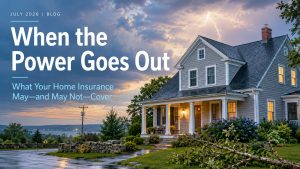
Summer storms in Connecticut can arrive quickly, bringing strong winds, fallen trees, lightning, heavy rain and power outages.
While homeowners insurance may help with certain types of storm damage, not every loss caused by an outage is automatically covered. Understanding your policy before a storm can help you avoid surprises later.
Wind, Lightning and Fallen Trees
Homeowners insurance generally covers damage caused by wind and lightning, subject to your policy deductible and coverage terms.
If a tree falls and damages your home, garage, fence or another insured structure, the resulting damage may be covered. However, removing a fallen tree that does not damage insured property may be limited or excluded.
Power Surges
Lightning strikes and sudden electrical surges can damage appliances, televisions, computers and home systems.
Coverage may apply depending on the cause of the surge and the terms of your policy. A whole-house surge protector can also provide an added layer of protection.
Spoiled Food
Some homeowners policies provide limited coverage for refrigerated or frozen food that spoils during a power outage.
The available amount, deductible and covered causes vary by policy. A short outage may not result in a covered claim, particularly when the value of the loss is close to your deductible.
Sump Pumps and Water Backup
A standard homeowners policy typically does not automatically cover water that backs up through a sewer, drain or sump pump.
Water backup coverage is usually added by endorsement. This is especially important for homes with finished basements, sump pumps or lower-level mechanical systems.
Portable Generator Safety
Generators can help during a prolonged outage, but they must be used carefully.
Always operate a portable generator outdoors and well away from doors, windows and vents. Never use one inside a garage, basement or enclosed space. A licensed electrician should install any permanent or connected generator system.
Should You File a Claim?
Before filing a claim, consider the total amount of damage, your deductible and the potential long-term effect of a claim on your insurance history.
Document the damage, take photographs and contact your insurance agent before beginning major repairs. Emergency measures to prevent additional damage should be completed as soon as safely possible.
Review Your Coverage Before the Next Storm
The best time to review your homeowners insurance is before severe weather arrives.
Page Insurance can help you review your policy, including:
- Water backup coverage
- Dwelling replacement cost
- Coverage for detached structures
- Personal property limits
- Equipment breakdown coverage
- Higher-value electronics and appliances
A quick coverage review can help confirm that your policy reflects your home, your belongings and your current needs.
Have questions about your homeowners coverage? Contact Page Insurance. We’re here to help you understand your policy before you need to use it.